
That $8 express wash on the way to work feels like a win — five minutes, no effort, car looks shiny driving away. But if you’re doing this weekly, you may be quietly destroying the one layer of paint that’s protecting your car’s finish: the clear coat. Here in the South Bay, where salt air and constant sun already put extra stress on paint, that damage adds up faster than most drivers realize.
What Is Clear Coat, and Why Does It Matter?
Clear coat is the transparent top layer sprayed over your car’s color coat. It’s not just there for shine — it’s the actual protective barrier standing between your paint and the outside world: UV rays, oxidation, bird droppings, road grime, and chemical exposure. Once clear coat is compromised, the color coat beneath it starts degrading, and there’s no wax or coating that can “fix” that — only expensive paint correction or a repaint.
How Express and Automatic Washes Actually Damage Your Paint
Most express washes aren’t designed to protect your paint — they’re designed for speed and volume. Here’s what’s happening every time your car goes through one:
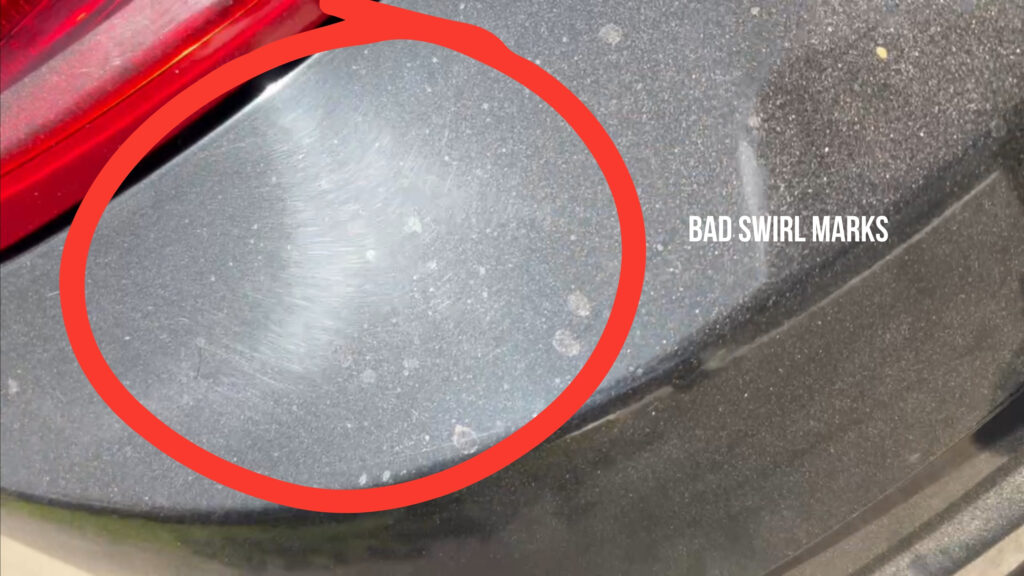
Spinning brushes and cloth strips create swirl marks
Those large rotating brushes or cloth strips touch every car that comes through that day, picking up grit, dirt, and dead paint particles from previous vehicles. That debris gets dragged across your paint under pressure, creating fine scratches called swirl marks — the “spiderweb” pattern you see under direct sunlight or at night under streetlights.
Harsh detergents strip wax, sealant, and coating protection
Many tunnel washes use high-pH detergents designed to cut through grease and grime fast. Those same chemicals strip away wax, sealants, and can degrade even ceramic coatings over repeated washes — leaving your paint exposed right when it needs protection most.
Shared water and reused equipment spread contaminants
Unlike a hand wash using fresh water and clean microfiber per panel, automated systems often recirculate water and reuse the same brushes/cloths on every car. Contaminants from a dirty truck ahead of you can end up embedded in your paint.
Poor or no proper drying causes water spots
Many express washes either skip drying entirely or use unfiltered forced air, which can leave mineral deposits (water spots) that etch into clear coat over time if not addressed.
Underbody and wheel well grime gets missed
Automated systems are built for speed on the visible panels — they routinely miss wheel wells, door jambs, and undercarriage areas where salt, sand, and grime accumulate and accelerate corrosion, especially for South Bay vehicles exposed to coastal air.
Signs Your Clear Coat Is Already Damaged
- Fine, web-like scratches visible under direct sunlight or LED light (swirl marks)
- A hazy, dull look even right after washing
- Reduced water beading — water sheets flat instead of forming beads
- Chalky, faded, or oxidized-looking patches, especially on the roof, hood, and trunk (the panels most exposed to sun)
- Small areas where the clear coat appears to be peeling or flaking (advanced failure — usually requires professional correction or repaint)
If you’re noticing any of these, the damage is already done — the goal at that point shifts from prevention to correction.
Why This Matters More in the South Bay
Living near the coast in Redondo Beach, Hermosa Beach, Manhattan Beach, or Torrance means your paint already deals with salt air, marine humidity, and near-constant sun exposure. Once an express wash strips away wax or coating protection, that bare, vulnerable clear coat is exposed to all of that — which is why cars washed regularly at tunnel washes near the beach often show oxidation and dullness faster than similar vehicles inland.
How to Prevent Clear Coat Damage
Skip the brush, choose hand washing
A proper hand wash using clean microfiber mitts and fresh water per panel (which is exactly how we do every Exterior Detail) avoids the swirl-mark risk entirely.
Apply a ceramic coating for real protection
A 2–3 year ceramic coating creates a hard, bonded layer that resists chemical stripping far better than wax, and makes your paint significantly more resistant to the kind of surface damage express washes cause — even if you occasionally can’t avoid one.
If your paint already has swirls or oxidation, correct it before protecting it
Coating over already-damaged clear coat just locks in the existing swirls and haze. A paint correction step polishes those imperfections out first, so the coating goes on top of a genuinely clean, level surface.
Choose touchless or mobile hand-wash options when you can’t DIY
If convenience is the draw of express washes, mobile detailing solves the same problem without the paint risk — we come to your home or office, so you’re not sacrificing protection for convenience.
Dry properly, every time
Air-drying or letting the sun dry your car leads to water spots that can etch into clear coat over time. A proper hand-dry with clean microfiber prevents this.
Frequently Asked Questions
Are all automatic car washes bad for clear coat?
Not all — “touchless” or laser/foam-only washes that use no physical brushes or cloths are significantly safer than traditional tunnel washes with spinning brushes. The brushes and cloth strips are the primary source of swirl-mark damage.
Can swirl marks be removed once they’re there?
Yes, in most cases. Swirl marks are typically light surface-level scratches in the clear coat that can be polished out through paint correction, which is why we include correction before every ceramic coating application.
How often is it safe to use an express wash?
There’s no universally “safe” frequency — even occasional use exposes your car to shared brushes and stripping detergents. If convenience is the priority, a touchless wash or mobile hand wash is a much lower-risk option.
Does ceramic coating make my car immune to express wash damage?
No coating makes your paint scratch-proof, but a properly applied ceramic coating significantly increases resistance to the chemical stripping and light surface damage that causes most of the visible dulling from repeated automatic washes.
How do I know if I need paint correction or just a regular detail?
If you can see swirl marks or dullness under direct sunlight or at night under LED lighting, that’s usually a sign correction is needed rather than just a standard wash. We do a visual inspection before every appointment and will tell you honestly which service your car actually needs.
Protect Your Paint the Right Way
South Bay Detail Guys hand washes every vehicle, panel by panel, with fresh water and clean microfiber — no shared brushes, no stripping chemicals. If your paint is already showing swirls or oxidation from express washes, we can correct it and lock in real protection with a 2–3 year ceramic coating. [Book your appointment today] and give your paint the protection an $8 wash never could.